

Introduction
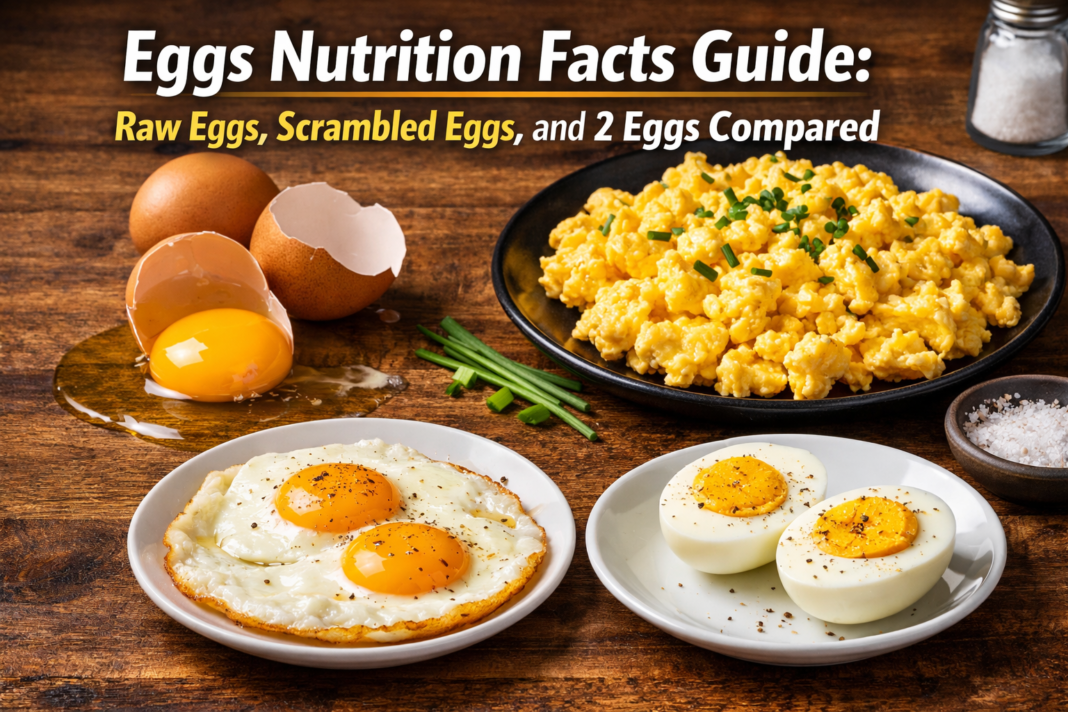
Eggs are one of the most nutrient-dense and affordable foods consumed around the world. Known for their versatility, rich taste, and impressive nutritional value, eggs are a staple in many diets, from traditional breakfasts to high-protein meal plans. Whether eaten raw, scrambled, boiled, or used in recipes, eggs provide essential nutrients that support muscle growth, brain function, and overall health. In this article, we will explore eggs nutrition facts in detail, examine raw eggs nutrition facts, scrambled eggs nutrition facts, and break down 2 eggs nutrition facts to help you make informed dietary decisions.
Complete Eggs Nutrition Facts
Eggs are considered a complete food because they contain high-quality protein along with essential vitamins and minerals. Eggs nutrition facts reveal that eggs provide a balanced combination of protein, healthy fats, and micronutrients needed for daily bodily functions. Unlike many other protein sources, eggs contain all nine essential amino acids, making them a complete protein.
Overview of Eggs Nutrition
The term eggs nutrition refers to the full nutritional profile of eggs, including macronutrients and micronutrients. Eggs are naturally low in carbohydrates and sugars, making them suitable for low-carb and ketogenic diets. Most of the nutrients are found in the yolk, while the egg white is primarily protein.
Eggs nutrition facts highlight the presence of vitamin B12, vitamin D, selenium, choline, and riboflavin. Choline is especially important for brain development and nervous system health, while selenium supports immune function and thyroid health.
“Eggs nutrition facts show eggs are rich in complete protein, healthy fats, vitamins, and minerals that support overall wellness.”
Health Benefits of Eggs Nutrition
Eggs provide several health benefits when consumed as part of a balanced diet. The nutrients found in eggs contribute to heart health, muscle maintenance, eye health, and cognitive function.
Eggs contain antioxidants such as lutein and zeaxanthin, which help protect eye health and reduce the risk of age-related vision problems. The protein in eggs supports muscle repair and growth, making eggs ideal for athletes and active individuals.
“Regular egg consumption supports muscle health, brain function, and eye health due to its rich nutrient profile.”
Raw Eggs Nutrition Facts
Raw eggs are sometimes consumed in protein shakes, smoothies, or traditional recipes. Understanding raw eggs nutrition facts is important for evaluating their nutritional value and potential risks.
Nutritional Value of Raw Eggs
Raw eggs nutrition facts show that raw eggs contain protein, fats, vitamins, and minerals similar to cooked eggs. However, the body absorbs protein from raw eggs less efficiently compared to cooked eggs. This means that although raw eggs contain protein, the body may not utilize it fully.
Raw eggs also contain avidin, a protein found in egg whites that binds to biotin and reduces its absorption. Cooking eggs neutralizes avidin, making biotin more available.
Macronutrients in Raw Eggs
The table below shows raw eggs nutrition facts for one large raw egg.
| Nutrient | Amount per Raw Egg |
|---|---|
| Calories | 72 kcal |
| Total Fat | 5 g |
| Saturated Fat | 1.6 g |
| Carbohydrates | 0.4 g |
| Protein | 6 g |
| Cholesterol | 186 mg |
Most calories in raw eggs come from fat and protein. Raw eggs contain almost no carbohydrates or sugars.
“Raw eggs nutrition facts show 72 calories, 6g protein, and 5g fat per egg.”
Safety Considerations of Raw Eggs
While raw eggs nutrition facts appear impressive, consuming raw eggs carries a higher risk of foodborne illness. Cooking eggs improves protein digestibility and reduces health risks.
Scrambled Eggs Nutrition Facts
Scrambled eggs are one of the most popular ways to consume eggs. Scrambled eggs nutrition facts vary depending on cooking methods and added ingredients such as oil, butter, or milk.
Nutritional Value of Scrambled Eggs
Scrambled eggs nutrition facts show that scrambled eggs retain most of the nutrients found in whole eggs. Cooking eggs improves protein absorption and makes nutrients easier for the body to use.
Scrambled eggs are a practical and safe option for daily consumption and can be customized with vegetables or herbs to enhance nutritional value.
Calories and Macronutrients in Scrambled Eggs
The table below shows scrambled eggs nutrition facts for one large egg scrambled with a small amount of oil or butter.
| Nutrient | Amount per Scrambled Egg |
|---|---|
| Calories | 90–100 kcal |
| Total Fat | 7 g |
| Saturated Fat | 2 g |
| Carbohydrates | 1 g |
| Protein | 6 g |
| Cholesterol | 190 mg |
Scrambled eggs nutrition facts show slightly higher calories due to added fats during cooking.
“Scrambled eggs nutrition facts provide 6g protein per egg with improved digestibility.”
Effect of Cooking on Nutrition
Cooking eggs slightly reduces heat-sensitive vitamins but increases antioxidant availability and protein absorption. Scrambled eggs nutrition facts remain highly favorable for most diets.
2 Eggs Nutrition Facts
Many people consume eggs in pairs, making 2 eggs nutrition facts particularly useful for meal planning and calorie tracking.
Calories in 2 Eggs
2 eggs nutrition facts show that two large eggs contain approximately 140 to 160 calories when raw. When scrambled with oil or butter, the calorie content may increase to around 180 to 200 calories.
Macronutrients in 2 Eggs
The table below outlines 2 eggs nutrition facts for two large eggs.
| Nutrient | Amount in 2 Eggs |
|---|---|
| Calories | 140–160 kcal |
| Total Fat | 10 g |
| Saturated Fat | 3.2 g |
| Carbohydrates | 1 g |
| Protein | 12 g |
| Cholesterol | 372 mg |
Two eggs provide a substantial amount of protein, making them ideal for breakfast or post-workout meals.
“2 eggs nutrition facts show 12g of complete protein, supporting muscle growth and satiety.”
2 Eggs Nutrition Facts in Daily Diets
For most healthy adults, eating two eggs per day fits well into a balanced diet. Eggs are filling, nutrient-rich, and easy to prepare, making them a convenient protein source.
Comparison of Eggs Nutrition Facts
Comparing raw eggs nutrition facts, scrambled eggs nutrition facts, and 2 eggs nutrition facts helps identify the best option for different dietary goals.
Eggs Nutrition Comparison Table
| Egg Type | Calories | Protein | Fat | Key Notes |
|---|---|---|---|---|
| Raw Egg (1) | 72 kcal | 6 g | 5 g | Lower protein absorption |
| Scrambled Egg (1) | 90–100 kcal | 6 g | 7 g | Better digestibility |
| Raw Eggs (2) | 144 kcal | 12 g | 10 g | Higher protein intake |
| Scrambled Eggs (2) | 180–200 kcal | 12 g | 14 g | More calories from cooking fats |
Scrambled eggs provide better nutrient absorption, while raw eggs offer fewer practical benefits.
“Scrambled eggs offer better protein absorption compared to raw eggs.”
Health Benefits of Eggs Nutrition
Eggs nutrition facts support a wide range of health benefits when eggs are consumed in moderation.
Eggs Nutrition for Weight Management
Eggs are high in protein and low in carbohydrates, helping control appetite and reduce unnecessary snacking. Eggs nutrition facts show that eggs promote satiety and support weight management.
Eggs Nutrition for Muscle Growth
Eggs provide high-quality protein and essential amino acids needed for muscle repair. Athletes and fitness enthusiasts often include eggs in their diets for this reason.
Eggs Nutrition for Brain and Eye Health
Eggs contain choline, lutein, and zeaxanthin, which support cognitive function and eye health. These nutrients help protect against age-related cognitive decline and vision problems.
“Eggs nutrition facts highlight benefits for muscle, brain, and eye health.”
Frequently Asked Questions About Eggs Nutrition
Are eggs healthy to eat every day
Yes, eggs can be eaten daily by most people. Eggs nutrition facts show they are rich in essential nutrients and protein.
Is it Better to Eat Raw Eggs or Scrambled Eggs
Scrambled eggs are generally better because scrambled eggs nutrition facts show improved protein absorption and safety.
How Many Calories are in 2 Eggs
2 eggs nutrition facts show approximately 140 to 160 calories when raw and up to 200 calories when scrambled.
Do Eggs Raise Cholesterol
Eggs contain cholesterol, but research suggests dietary cholesterol has minimal impact on blood cholesterol for most people.
“Eggs are a nutrient-dense food suitable for daily consumption in moderation.”
Conclusion
Eggs are a nutritional powerhouse that offers high-quality protein, essential vitamins, and healthy fats. Understanding eggs nutrition facts, including raw eggs nutrition facts, scrambled eggs nutrition facts, and 2 eggs nutrition facts, allows you to incorporate eggs into your diet more effectively. Scrambled eggs provide the best balance of safety, digestibility, and nutrition, while two eggs offer a convenient and filling portion size. By including eggs regularly in your meals, you can enjoy their versatility and reap their many health benefits.
Read More:- Egg Nutrition Facts: Complete Guide to 1 Egg, Boiled Egg, and Hard-Boiled Egg