


There is a particular kind of frustration that millions of women know intimately. It is the moment you snap at someone you love over something trivial, then sit in the quiet afterward wondering, Who was that? It is the afternoon when a task you breezed through last week suddenly feels like climbing a mountain in the dark. It is the wave of inexplicable sadness that arrives like weather, with no event to anchor it. And it is the maddening experience of mentioning any of this to someone, only to be told you are “just being emotional,” or worse, “just hormonal.”
Here is the truth that deserves to be said plainly and warmly: you are not making it up, you are not too sensitive, and you are not broken. Your mind and your menstrual cycle are in constant, intimate conversation. The hormones that orchestrate ovulation and menstruation are the very same chemical messengers that shape your mood, your anxiety, your focus, your energy, and your sense of self. When those hormones rise and fall across the month, your inner emotional landscape rises and falls with them. This is not a character flaw. It is neuroscience.
A woman journaling thoughtfully by a window
For most of medical history, this connection was either ignored, trivialized, or pathologized. Women were told their cyclical distress was hysteria, weakness, or simply “the curse.” But the science of the last few decades has revealed something far more empowering: your cycle is not a liability to be managed or hidden. It is a source of information. When you learn to read it, you gain a kind of insight into yourself that most people never access, the ability to anticipate your own emotional tides, to plan your life with the grain of your biology instead of against it, and to extend yourself the compassion you have probably been withholding for years.
This is a long article, because this is a topic that deserves depth rather than a listicle. We are going to walk through the actual science of how estrogen and progesterone act on your brain, how your mood predictably shifts across the four phases of your cycle, the crucial and often-missed difference between ordinary PMS and the serious condition known as PMDD, why cycle-related anxiety and “brain fog” are so real and so dismissed, and how tracking your mood alongside your cycle can transform vague suffering into something you can actually understand and work with. We will also talk honestly about how all of this changes in PCOS, perimenopause, and while taking hormonal birth control, and we will be clear about when it is time to reach out for professional mental-health support.
By the end, you will not just understand the cycle-mood connection. You will have a practical, phase-by-phase toolkit for supporting your mind through every part of your month. Let us begin.
Why Your Brain and Your Cycle Are Inseparable
To understand why your mood shifts with your cycle, you first have to understand a deceptively simple fact: hormones are not confined to your reproductive organs. They travel through your entire body, including your brain, and your brain is absolutely covered in receptors that respond to them.
Estrogen and progesterone, the two leading characters in the monthly hormonal drama, are what scientists call neuroactive or neuromodulatory. That means they do not just regulate ovulation and the uterine lining. They actively change how your brain cells communicate, how much of certain mood chemicals you produce, and how sensitive you are to stress. Your brain is, in a very real sense, a hormone-responsive organ.
Think of it like this. Your neurotransmitters, the chemicals that govern mood, are the actors on a stage. Estrogen and progesterone are the lighting and the music. The actors do not change, but when the lighting shifts warm and golden and the music swells, the whole scene feels hopeful and bright. When the lights dim and the music turns minor-key, the very same actors suddenly seem to be in a tragedy. Your hormones are constantly adjusting the lighting and the score of your inner experience, and they do it on a roughly monthly schedule.
Estrogen: The Mood Lifter and Mental Sharpener
Estrogen is, broadly speaking, the hormone that tends to make you feel good. When estrogen is rising and high, most women report feeling more confident, more social, more optimistic, mentally sharper, and more energetic. There are concrete biochemical reasons for this.
Estrogen boosts serotonin, the neurotransmitter most associated with feelings of well-being, contentment, and emotional stability. It increases both the production of serotonin and the number of serotonin receptors, essentially turning up the volume on your brain’s natural mood-stabilizing system. This is part of why a deficit in serotonin is implicated in depression, and why so many antidepressants work by keeping more serotonin available.
Estrogen also supports dopamine, the neurotransmitter of motivation, reward, and drive. Higher estrogen is associated with feeling more goal-oriented and capable, the sense that you can take on the world. On top of that, estrogen influences norepinephrine, which affects alertness and energy, and it supports the health of brain cells themselves, promoting connections between neurons and protecting cognitive function. Estrogen even modulates BDNF, a protein that helps your brain stay plastic, adaptable, and resilient.
When estrogen is climbing toward ovulation, this is the hormonal equivalent of stage lights warming up. Words come more easily. Verbal memory sharpens. Many women notice they feel more articulate, quicker-witted, and more comfortable in social situations. This is not your imagination. It is your serotonin and dopamine systems being gently amplified.
Progesterone: The Calming, Complicating Companion
Progesterone, which rises in the second half of your cycle after ovulation, is more complicated. In some respects it is your body’s natural relaxant. Progesterone is converted in the body into a compound called allopregnanolone, which acts on the same brain receptors (the GABA receptors) that anti-anxiety medications and even alcohol act upon. GABA is your brain’s primary calming, inhibitory neurotransmitter, the one that quiets the chatter and helps you feel settled. When allopregnanolone is working smoothly, progesterone can feel soothing, grounding, and sleep-promoting.
But here is the twist that explains so much premenstrual suffering. For some women, and especially as progesterone levels fluctuate, this same allopregnanolone system can backfire. When progesterone rises and then drops, or when an individual’s brain is particularly sensitive to these shifts, the calming GABA effect can paradoxically flip into irritability, anxiety, restlessness, and low mood. Researchers increasingly believe that PMS and the more severe PMDD are not caused by abnormal hormone levels at all, but by an abnormal sensitivity of the brain to perfectly normal hormonal changes. The hormones are not the problem. The brain’s reaction to them is.
This is a profoundly validating insight. It means that two women can have identical hormone levels, and one sails through her luteal phase while the other suffers intensely, not because one is stronger or more disciplined, but because their brains respond differently to the same biochemical signals. Your premenstrual distress is biological, not a failure of willpower.
The Stress Connection
There is one more crucial piece. Estrogen and progesterone both interact with your stress system, the hypothalamic-pituitary-adrenal axis that governs cortisol. When estrogen is high, you tend to be more resilient to stress, more able to bounce back, more emotionally buffered. When estrogen drops in the late luteal and menstrual phases, that buffer thins. The same stressful email, the same difficult conversation, the same sleepless night, can land much harder simply because your hormonal shock absorbers are temporarily depleted.
This is why something that rolls off your back on day ten of your cycle can feel utterly destabilizing on day twenty-six. Nothing about the external world changed. Your internal capacity to absorb it did.
Your Mood Across the Four Phases
Now that you understand the underlying chemistry, let us map it onto the actual rhythm of your month. Your cycle is traditionally divided into four phases, and each has its own characteristic emotional weather. Understanding these phases is genuinely life-changing, because it lets you stop being surprised by your own patterns and start working with them.
A quick note before we begin: every woman is different. Cycle lengths vary, and not everyone experiences every phase the same way. The general arc described here is a map, not a prescription. Your own tracking will reveal your personal version of it, which is exactly why tracking matters so much. Think of these phases as the seasons of your inner year. Just as you would dress differently and plan differently for summer versus winter, you can live differently across your hormonal seasons.
The Menstrual Phase: The Reset
The menstrual phase begins on the first day of your period and typically lasts three to seven days. Hormonally, this is the basement. Both estrogen and progesterone are at their lowest, having dropped sharply in the days before bleeding began.
Emotionally, this phase is often misunderstood. Yes, the low hormones can mean low energy, a desire to withdraw, and sometimes lingering sadness from the premenstrual days. But many women also describe a sense of relief and release once bleeding starts, almost as if a pressure valve has been opened. The intense irritability of the late luteal phase frequently softens. There can be a quiet, reflective, even intuitive quality to these days. Many women report that their inner critic goes quiet and a kind of honest clarity emerges, the ability to see what is and is not working in their lives.
This is your reset. Biologically, your body is shedding the uterine lining and preparing to begin anew. Emotionally, it is a natural time for rest, reflection, and gentleness. If you can, this is the phase to lower the demands you place on yourself, to say no to optional obligations, to sleep more, and to honor the introspective pull rather than fighting it. The energy will return. For now, the wisest move is often to slow down.
The Follicular Phase: The Rising
After your period ends, you enter the follicular phase, which technically begins on day one but is most noticeable in the roughly week-long stretch after bleeding stops, as your body prepares an egg for ovulation. This is where estrogen begins its glorious climb.
If the menstrual phase is winter, the follicular phase is spring. As estrogen rises, so does serotonin and dopamine, and most women feel the shift. Energy returns. Optimism reappears. The mental fog lifts and thinking feels crisp and clear again. This is often the phase of new ideas, of feeling brave enough to start projects, of social energy and outward focus. You may notice you are more willing to take risks, more verbally fluent, more drawn to novelty.
This is biologically the ideal time for fresh starts. If you have a hard conversation to initiate, a project to launch, a workout regimen to begin, or a goal that requires courage and momentum, the rising follicular phase tends to be your most naturally resourced window. Your brain is, quite literally, primed for growth and possibility.
The Ovulatory Phase: The Peak
Around the middle of your cycle, estrogen peaks and triggers ovulation, the release of an egg. This is, for many women, the emotional and energetic high point of the entire month, a span of just a few days when everything seems to come together.
At peak estrogen, with a brief surge of testosterone joining the party, women often report feeling their most confident, magnetic, articulate, and social. This is the phase where you feel most like the best version of yourself, comfortable in your skin, quick on your feet, warm and outgoing. Verbal and communication skills are often at their sharpest. There is a reason this phase has been associated, evolutionarily, with attraction and connection. Your whole system is dialed toward engagement.
Practically, this is your window for anything that requires you to shine. Important presentations, interviews, first dates, big social events, difficult negotiations, public speaking. If you can align your calendar so that the moments requiring confidence and charisma fall during ovulation, you are stacking the deck in your favor. You are not “tricking” anyone. You are simply scheduling your boldest tasks for when your biology is most cooperative.
The Luteal Phase: The Descent
After ovulation, you enter the luteal phase, which lasts roughly two weeks until your next period. This is the long, complex stretch that holds the most emotional turbulence, and understanding it is perhaps the single most useful thing you can do for your mental well-being.
In the early luteal phase, progesterone rises and, for many women, brings a pleasant sense of calm and steadiness. This is the nesting energy, a turn inward and toward the practical. You may feel less social and more focused on tidying, organizing, and tending to detail-oriented work. There is often a productive, grounded quality to these early luteal days.
But as the luteal phase progresses, especially in its final stretch, both estrogen and progesterone begin to fall. And this is where the trouble brews. The estrogen drop pulls down serotonin, removing the mood-stabilizing buffer you had earlier in the month. The fluctuating progesterone can destabilize the calming GABA system. The stress-resilience cushion thins. The result, for a great many women, is the cluster of symptoms we call premenstrual: irritability, anxiety, sadness, tearfulness, sensitivity, low energy, and the dreaded brain fog.
The crucial reframe here is this: the late luteal phase is not when you become a worse person. It is when your hormonal support for an even keel is at its lowest. The harsh self-talk, the sense that everything is wrong, the conviction that you are failing at life, these are frequently the late luteal phase talking. The feelings are real and they deserve compassion, but they are also, in large part, chemically amplified and temporary. Knowing this does not erase the discomfort, but it changes everything about how you relate to it. When you can say to yourself, This is my day twenty-six brain, and it will pass when my period starts, you take back enormous power.
A serene woman practicing calm self-care

PMS vs PMDD: Knowing the Difference
Most women are familiar with the term PMS, premenstrual syndrome. Far fewer have heard of PMDD, premenstrual dysphoric disorder, and yet for the women who have it, knowing the difference can be the difference between years of confusion and finally getting the right help. Let us be precise and clear, because precision here is genuinely empowering.
What PMS Actually Is
PMS refers to the collection of physical and emotional symptoms that many women experience in the luteal phase, typically the week or so before their period. It is extremely common. Estimates suggest that the large majority of menstruating women experience at least some premenstrual symptoms, and a meaningful portion experience symptoms significant enough to notice and want to manage.
The emotional symptoms of PMS include irritability, mood swings, anxiety, low mood, tearfulness, feeling overwhelmed, and difficulty concentrating. The physical symptoms include bloating, breast tenderness, headaches, fatigue, food cravings, joint aches, and changes in sleep. Crucially, with ordinary PMS, these symptoms are real and sometimes uncomfortable, but they do not typically derail your life. You can still function at work, maintain your relationships, and carry on, even if you feel less than your best. The symptoms arrive in the luteal phase and reliably resolve once your period begins.
PMS is best thought of as the normal, if frustrating, premenstrual version of the hormonal dip we have been describing. Tracking it, planning around it, and using phase-aware self-care strategies (which we will cover in depth) can make a substantial difference.
What PMDD Is, and Why It Is Serious
PMDD, premenstrual dysphoric disorder, is a different and far more severe condition. It is a recognized mental-health disorder, included in the major diagnostic manuals, and it affects a smaller but significant percentage of menstruating women. PMDD is not just “bad PMS.” It is a distinct condition in which the brain’s extreme sensitivity to normal hormonal fluctuations produces debilitating psychological symptoms.
The hallmark of PMDD is the severity and the impact. Women with PMDD experience, in the luteal phase, symptoms that may include profound depression and hopelessness, severe anxiety or tension, dramatic mood swings, intense and persistent irritability or anger, a feeling of being out of control, and in the most serious cases, thoughts of suicide or self-harm. These symptoms are severe enough to significantly disrupt work, relationships, and daily functioning. A woman with PMDD may feel, for a week or two every single month, like a different and unrecognizable person, only to return to herself once her period arrives.
The cyclical pattern is the key diagnostic clue. In PMDD, symptoms appear in the luteal phase, reliably and predictably, and then lift within a few days of menstruation beginning, with a symptom-free window in the follicular and ovulatory phases. This on-off pattern, tied tightly to the cycle, is what distinguishes PMDD from a chronic mood disorder that is present all month long.
If you recognize yourself or someone you love in this description, please hear this clearly: PMDD is real, it is biological, it is not a weakness, and it is treatable. Effective treatments exist, including certain antidepressants (sometimes taken only in the luteal phase), specific hormonal approaches, cognitive behavioral therapy, and lifestyle interventions. The single most important step is documentation. To diagnose PMDD, a clinician typically wants to see at least two cycles of daily symptom tracking that demonstrate the cyclical pattern. This is one of the most powerful reasons to track your mood alongside your cycle: it transforms a vague sense of “something is very wrong” into objective evidence that you can bring to a doctor, evidence that can finally unlock the right care.
Premenstrual Exacerbation
There is a third, important category worth naming. Some women have an underlying mental-health condition, such as depression, anxiety, or bipolar disorder, that is present all month but gets significantly worse in the premenstrual window. This is called premenstrual exacerbation, and it is distinct from PMDD because the symptoms do not fully disappear after menstruation, they simply intensify before it. Recognizing this pattern matters too, because it can change how a condition is best treated. Again, tracking is what reveals the pattern.
Anxiety, Depression, Irritability, and Brain Fog
Let us spend some time on the specific symptoms that so often go dismissed, because naming them clearly and connecting them to your cycle is deeply validating.
Cyclical Anxiety
Many women experience a noticeable rise in anxiety in the luteal phase. It can show up as a racing mind, a sense of dread without obvious cause, increased worry, restlessness, a shorter fuse for stress, or even physical anxiety symptoms like a racing heart and tight chest. This is closely tied to the progesterone and allopregnanolone story. When the GABA-calming system is destabilized by falling and fluctuating progesterone, your brain’s natural ability to soothe itself is compromised, and anxiety rushes in to fill the gap.
If you have ever wondered why you feel inexplicably anxious for a few days each month, why small worries balloon into catastrophes, or why your tolerance for uncertainty seems to evaporate at a certain point in your cycle, you now have your answer. It is not that you suddenly have more to worry about. It is that your brain’s anxiety brakes are temporarily worn thin.
Cyclical Low Mood and Depression
The estrogen-serotonin connection explains why so many women experience low mood, sadness, and even depressive symptoms in the late luteal and early menstrual phases. As estrogen falls, serotonin support falls with it, and the same brain that felt buoyant and capable two weeks earlier now feels heavy, flat, and pessimistic.
The thoughts that accompany this can be remarkably convincing. I am failing. Nothing is working. I am alone. This will never get better. The danger is that we believe these thoughts as objective truth rather than recognizing them as the predictable output of a temporarily low-serotonin state. This is precisely why tracking is so protective. When you can look at your chart and see that this exact mood arrives at this exact point every month and lifts every month, you gain the ability to hold the thoughts more lightly, to say, I am in the dip, and the dip is not the truth of my life.
Irritability and Anger
Irritability and anger are among the most common and most stigmatized premenstrual symptoms. Women are socialized to be agreeable and pleasant, so the surge of irritability in the luteal phase can come with a heavy load of shame on top of the irritation itself. You snap, and then you feel terrible about snapping, and the guilt compounds the bad mood.
But premenstrual irritability is a genuine neurochemical phenomenon, driven by the same drops in serotonin and the same destabilization of the calming systems. It often functions as a kind of signal, too. Many women find that the things that irritate them premenstrually are things that genuinely deserve attention but that they have been tolerating or suppressing all month. The luteal phase, with its lowered patience, can be honest in a useful way. It can show you where your boundaries have been crossed. The goal is not to dismiss the irritability, but to understand its source and to give yourself extra grace and space during these days.
Brain Fog
Finally, brain fog, that frustrating sense of mental cloudiness, forgetfulness, difficulty concentrating, and slowed thinking. Many women notice it most in the late luteal and menstrual phases. The drop in estrogen affects the neurotransmitters and brain processes that support clear cognition, verbal recall, and focus. Words get lost. Multitasking becomes harder. You walk into a room and forget why.
This is not a sign of declining intelligence or impending doom. It is a temporary, hormonally driven shift in cognitive resources. Knowing it is coming lets you plan around it: scheduling your most demanding mental work for the sharp follicular and ovulatory phases, and being kinder to yourself, leaning on lists and reminders, during the foggier days. Your sharpness will return with your rising estrogen, as reliably as the sun.
Why Your Mood Symptoms Get Dismissed, and Why Tracking Validates Them
Here is something that needs to be said with some force. The dismissal of women’s cyclical mood symptoms is not just frustrating, it is a genuine failure that has caused real suffering. For generations, women who tried to describe their cyclical emotional experiences were waved away as dramatic, hysterical, hormonal in the pejorative sense, or simply complaining. The word “hormonal” itself became an insult, a way to invalidate a woman’s feelings by attributing them to her biology, as though her biology made them less real.
The irony is staggering, because her biology is exactly what makes them real. These mood shifts are not invented. They are the measurable consequence of measurable changes in brain chemistry driven by measurable changes in hormones. The dismissal got the biology exactly backward.
There are several reasons these symptoms have been so easily waved off. Cyclical symptoms are invisible and internal, so others cannot see them. They fluctuate, so on a “good” day a woman may seem perfectly fine, leading observers to doubt the “bad” days. Historically, women’s health research has been severely underfunded and the menstrual cycle in particular has been understudied. And there is a deep cultural discomfort with menstruation itself that has kept these conversations in the shadows.
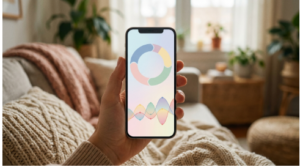
This is where tracking becomes genuinely revolutionary. When you track your mood alongside your cycle, day after day, you create something that is very hard to dismiss: data. You move from “I feel like I get sad before my period sometimes, maybe?” to “Here is a chart showing that my mood reliably drops on days twenty-four through twenty-eight of every cycle, and lifts on day two.” That shift, from vague impression to documented pattern, is transformative on two levels.
First, it validates you to yourself. There is profound relief in seeing your own suffering laid out as a clear, repeating pattern. It proves you were never making it up. It silences the inner voice that called you dramatic. It replaces self-blame with self-understanding.
Second, it validates you to others, including, crucially, to doctors. A clinician confronted with two cycles of clear daily tracking data cannot easily wave you away. The pattern speaks for itself. This is how women finally get diagnosed with PMDD, finally get appropriate treatment, finally get believed. Tracking turns your lived experience into evidence, and evidence is power.
A phone showing a cycle and mood tracking chart
How Tracking Reveals Your Patterns and Lets You Plan Your Life
Beyond validation, tracking your mood alongside your cycle gives you a kind of self-knowledge that genuinely improves daily life. When you have tracked for a few cycles, patterns emerge that you can actually use.
You begin to know, with reasonable confidence, when your confident, high-energy days will arrive, and you can deliberately schedule the things that benefit from confidence and energy into those windows: the big pitch, the hard conversation, the social events, the creative launches. You begin to know when your low, foggy, sensitive days will arrive, and you can protect those windows: lightening your schedule, lowering the stakes, building in rest, and warning the people close to you that you may need extra space.
This is not about letting your cycle control you. It is the opposite. It is about reclaiming agency by working intelligently with your own biology rather than being repeatedly ambushed by it. There is a world of difference between being blindsided by a wave of premenstrual despair and feeling like your whole life is collapsing, versus seeing it coming, recognizing it for what it is, and gently adjusting your plans to ride it out. The first is suffering. The second is wisdom.
Tracking also helps you spot when something is genuinely off. If your patterns suddenly change, if symptoms intensify dramatically, if the cyclical lift stops happening, that is valuable information that something may warrant a conversation with a healthcare provider. Your tracking becomes a baseline against which you can notice meaningful change.
This is exactly the kind of self-knowledge that a thoughtfully designed tracking tool can support. A growing number of women are turning to apps that go beyond simply marking period dates to actually help them understand the emotional dimension of their cycles. Resources like the best period tracker guides online have emerged precisely because women are hungry for tools and guidance that take the cycle-mood connection seriously, rather than treating menstruation as nothing more than a date on a calendar.
A Closer Look at Vyve: Tracking That Understands Your Mind
Among the new generation of cycle apps built with the mind in focus, Vyve has been designed specifically around the insight at the heart of this article: that your cycle and your mood are inseparable, and that understanding the connection is genuinely life-improving. It is worth describing how this kind of tool works in practice, because the right app can turn the abstract idea of “tracking your mood” into a simple, sustainable daily habit that actually delivers insight.
At its foundation, Vyve offers rich symptom and mood tracking. Rather than asking you only whether you are bleeding, it invites you to log how you are actually feeling, your mood, your energy, your anxiety, your focus, alongside physical symptoms. Over time, this builds the very chart we have been describing, the personal map of your emotional cycle. Logging takes seconds, but the accumulated picture is something you simply cannot get any other way. You can learn more about the broader Vyve approach to cycle wellness at vyvecare, or try the Period Tracker App directly to start logging your moods.
What sets a tool like this apart, though, is what it does with that information. Vyve includes an AI Cycle Coach that does not just store your data but helps you make sense of it. Instead of leaving you to puzzle out your own patterns, the coach can explain your emotional patterns in plain language, connecting the dots between where you are in your cycle and what you are feeling. When you log a low, anxious day, a coach that understands the science can gently remind you that you are in your late luteal phase, that this dip is hormonally driven, and that it is likely to lift soon, turning a moment of distress into a moment of understanding. That contextual reassurance, available right when you need it, is something a paper calendar can never provide.
Vyve also leans into the practical, body-based side of mood support through cycle-synced food and nutrition guidance. Because what you eat genuinely affects your mood, and because your nutritional needs shift across your cycle, the app offers nutrition suggestions tailored to your current phase, support for the iron and energy demands of menstruation, blood-sugar-steadying guidance for the luteal phase when cravings and mood dips intersect, and foods that support serotonin and steady energy. It is a way of caring for your mind through your body, in sync with where you actually are in your month.
On top of this, the app provides AI predictions, forecasting your upcoming phases so you are never caught off guard, and helping you plan the confident windows and protect the vulnerable ones. And underpinning all of it is a privacy-first design, which matters enormously when the data in question is as intimate as your moods, your mental-health symptoms, and your reproductive cycle. Knowing that your most personal information is handled with genuine respect for your privacy is not a small thing. It is the foundation of trust that any tool dealing with this kind of data must earn.
For women who want to start treating their cycle as the source of self-knowledge it truly is, having all of this in one place, the tracking, the AI explanations, the nutrition support, the predictions, and the privacy, makes the difference between an app you abandon after a week and a companion you genuinely rely on. You can find Vyve as a Period Tracker App and explore how it approaches the cycle-mood connection. The aim is not to add another notification to your life, but to give you a clearer, kinder relationship with your own mind.
Practical Mood-Support Strategies by Phase
Understanding the science is empowering, but understanding is most useful when it translates into action. Here is a practical, phase-by-phase toolkit for supporting your mental well-being across your cycle. Think of it as dressing for your inner weather. None of this requires perfection. The goal is to work with your biology, gently and consistently.
Menstrual Phase: Permission to Rest
This is your reset, and the dominant theme is gentleness.
Nutrition. Menstruation depletes iron through blood loss, and low iron can worsen fatigue and low mood. Prioritize iron-rich foods like leafy greens, legumes, and if you eat it, red meat, paired with vitamin C to aid absorption. Warm, nourishing, comforting foods suit this phase well. Stay hydrated, as it helps with cramps and energy.
Movement. This is not the phase to push for personal records. Gentle movement, walking, restorative yoga, stretching, can ease cramps and lift mood through endorphins without depleting you further. Honor your energy. If your body wants rest, rest is the right answer.
Sleep. Prioritize it without guilt. Your body is doing real work, and the introspective pull of this phase is a natural invitation to slow down. Earlier nights and a calming wind-down routine pay dividends.
Boundaries. This is an ideal phase to lighten your social and professional load where you can. Say no to optional commitments. Give yourself permission to cancel the thing you are dreading.
Self-compassion. Let the reflective quality of this phase be a gift rather than a burden. If sadness lingers from the premenstrual days, treat yourself as you would treat a dear friend who was tired and tender.
Follicular Phase: Channel the Rising Energy
As estrogen climbs and your mood and energy lift, this is the phase to build momentum.
Nutrition. Fresh, light, vibrant foods suit this energetic phase. Lean proteins and plenty of vegetables support your rising energy. This is a good time to establish nourishing habits, since your motivation is naturally higher.
Movement. Your body can typically handle more intensity now. This is the phase to try new workouts, push a little harder, and take advantage of your returning strength and stamina. Movement here amplifies the natural mood lift.
Focus and planning. Capitalize on the mental clarity. This is the time to brainstorm, plan, learn new things, and start projects. Schedule your most creative and strategic work here.
Social and courage. Use the rising confidence to initiate the things that require bravery. Reach out, say yes, begin.
Ovulatory Phase: Shine and Connect
At your estrogen and confidence peak, lean into engagement.
Nutrition. Support the slightly higher metabolic demands with balanced meals and plenty of fiber and antioxidants from colorful fruits and vegetables, which also help your body process the hormonal peak smoothly.
Movement. Group activities and higher-energy social workouts suit this outgoing phase. Your coordination and energy are strong.
Social and high-stakes tasks. This is your window to shine. Schedule presentations, interviews, important conversations, dates, and events that benefit from your peak confidence and communication skills.
A gentle caution. Because you feel so capable, be mindful not to overcommit to things that will land in your luteal phase, when your capacity will be lower. The ovulatory you sometimes makes promises the luteal you has to keep. Plan with kindness toward your future self.
Luteal Phase: Protect and Soothe
This is the phase that needs the most intentional support, especially in its later days.
Nutrition. Blood sugar stability is your friend here. Steady, regular meals with protein, healthy fats, and complex carbohydrates help prevent the energy crashes that worsen irritability and mood. Complex carbohydrates can actually support serotonin, so do not fear them, just choose whole-food sources. Magnesium-rich foods (dark leafy greens, nuts, seeds, dark chocolate) may help with mood and tension. Calcium-rich foods have shown promise for premenstrual symptoms. Consider easing back on caffeine and alcohol in the late luteal phase, as both can worsen anxiety and disrupt sleep when you are already vulnerable. Honor cravings without shame, but try to meet them with nourishing versions where you can.
Movement. In the early luteal phase, steady moderate exercise feels good. As you approach your period, gentler movement, walking, yoga, swimming, tends to suit better. Exercise remains one of the most effective natural mood supports, but the intensity should taper as your energy does.
Sleep. Protect it fiercely, because sleep disruption and mood disruption feed each other viciously in this phase. A consistent wind-down routine, a cool dark room, and limiting screens before bed all help.
Boundaries. This is the phase to build in protection. Lighten your schedule where possible in the late luteal days. Communicate with the people close to you, letting them know you may need more space or patience. Front-load demanding tasks into earlier phases when you can.
Self-compassion above all. This is the phase where the inner critic gets loudest and where self-compassion matters most. When the harsh thoughts come, practice naming them: This is my premenstrual brain. These feelings are real but they are amplified, and they will pass. Treat yourself with extraordinary tenderness. Lower your standards for productivity. Forgive yourself for the snappishness. The kindest thing you can do in the luteal phase is to stop demanding that you feel and perform like your ovulatory self.
The Role of Reflection and Inner Work
Mood support is not only about food, movement, and sleep. The luteal and menstrual phases, with their natural turn inward, are also an invitation to deeper self-reflection, and many women find enormous value in practices that help them process emotions rather than just manage symptoms.
Journaling, as the woman by the window at the start of this article reminds us, is one of the most accessible and powerful of these. Writing down what you feel, especially in the emotionally heightened luteal days, can help you separate the chemically amplified noise from the genuine signal, the real concerns worth addressing once your hormones rebalance. Meditation, breathwork, and simply sitting quietly with your feelings all build the capacity to observe your moods rather than be swept away by them.
Some women find that reflective and spiritual-wellness practices help them make meaning of their emotional cycles in a way that pure symptom tracking does not. The introspective phases of the cycle have, across many cultures and traditions, been associated with intuition and inner knowing, and there is a long history of women using contemplative tools to process their emotional lives. In this spirit, many women today enjoy reflective apps that prompt self-examination and emotional exploration. An AI tarot and astrology companion like Raka Ai, for instance, can serve as a gentle, structured prompt for reflection, a way of asking yourself the bigger questions about what you are feeling and why, particularly during the more introspective, intuitive days of your cycle. The point is not whether one believes the cards predict the future. The point is that such tools can create a quiet, ritualized space to sit with your emotions and listen to yourself, which is exactly what the reflective phases of the cycle invite.
Used this way, alongside grounded cycle and mood tracking, reflective practices become another layer of self-knowledge. Many women find that pairing the data-driven clarity of an app like Vyve with the contemplative space offered by something like Raka Ai gives them both the what and the why of their emotional patterns, the measured pattern and the felt meaning. Whatever tools resonate with you, the underlying principle holds: making time to truly reflect on your emotional life, especially during the inward phases, is a profound act of self-care.
A happy balanced woman smiling outdoors

When the Cycle-Mood Connection Looks Different
The general arc we have described is the typical picture, but several common situations change the cycle-mood story in important ways. If your experience does not match the standard map, this section may explain why, and reassure you that you are far from alone.
PCOS and Mood
Polycystic ovary syndrome, or PCOS, is one of the most common hormonal conditions affecting women of reproductive age, and it carries a significant emotional dimension that is too often overlooked. PCOS involves irregular or absent ovulation, which means the predictable rise and fall of hormones described above may not follow the usual rhythm. Cycles can be long, unpredictable, or missing altogether, which makes mood patterns harder to map and can itself be a source of distress and uncertainty.
Beyond the irregularity, PCOS is associated with higher rates of anxiety and depression. Several factors contribute: the hormonal imbalances themselves, including elevated androgens; the common involvement of insulin resistance, which affects energy and mood through blood-sugar swings; and the genuine emotional burden of living with symptoms like irregular cycles, weight changes, skin and hair changes, and fertility concerns. If you have PCOS and you struggle with mood, please know that this is a recognized part of the condition, not a personal failing, and that managing the underlying metabolic and hormonal aspects, often with professional support, frequently improves mood as well. Tracking remains valuable even with irregular cycles, because it can reveal the patterns that do exist and help you and your clinician understand your particular picture.
Perimenopause and the Hormonal Rollercoaster
Perimenopause, the transitional years leading up to menopause that often begin in a woman’s forties, is when the cycle-mood connection can become especially turbulent. During perimenopause, hormone levels do not simply decline smoothly. They fluctuate wildly and unpredictably, with estrogen sometimes swinging higher and then crashing lower than ever before. This hormonal volatility can produce intense and disorienting mood symptoms.
Many women are genuinely blindsided by perimenopausal mood changes, experiencing new or worsened anxiety, irritability, low mood, and a sense of emotional instability that does not match anything they felt before, often alongside disrupted sleep and cognitive changes that amplify everything. Some women who never had significant premenstrual symptoms find them emerging for the first time, and those with a history of PMDD or hormone-sensitive mood issues may find this a particularly challenging transition. It is a phase that deserves far more open conversation than it has historically received. The reassuring news is that perimenopausal mood symptoms are real, hormonally driven, and treatable, and that tracking your symptoms during these years is just as valuable as ever for understanding what is happening and communicating it to a healthcare provider. You are not losing your mind. Your hormones are in transition, and so, temporarily, is your emotional equilibrium.
Hormonal Birth Control and Mood
Hormonal contraceptives, the pill, patch, ring, hormonal IUD, implant, and injection, deserve an honest and balanced discussion, because they change the hormonal landscape and therefore can change mood, in different directions for different women.
Hormonal birth control works largely by suppressing your natural cycle and supplying steady synthetic hormones, which means the natural rise and fall we have described is flattened. For some women, this is a genuine relief: those who suffer from severe PMS or PMDD sometimes find that smoothing out the hormonal fluctuations dramatically improves their mood, and certain pills are even used specifically to treat PMDD. For these women, contraception can be a mood stabilizer.
For other women, however, hormonal contraception can negatively affect mood, contributing to low mood, anxiety, reduced emotional range, or feeling “not quite themselves.” Because individual brains respond so differently to synthetic hormones, the same pill can be wonderful for one woman and difficult for another. There is no universal answer, and your experience is valid whatever it is.
The most important takeaways are these. First, if you start a new form of hormonal contraception, tracking your mood is genuinely useful, because it can reveal whether your emotional well-being is improving, worsening, or unchanged, giving you and your provider real information to work with. Second, if you suspect your contraception is harming your mood, this is a legitimate concern worth raising with a healthcare provider, and there are many options to explore. Your mental health matters just as much as the contraceptive benefit, and the two should be weighed together. As always, none of this is a reason to start or stop any medication on your own. It is a reason to track, to notice, and to have informed conversations with a professional who knows your history. For women researching their options, reading widely from a trusted best period tracker resource and the educational material at vyvecare can help you ask better questions.
When to Seek Mental-Health Support
This article is intended as general education and self-understanding, not as medical advice, and it is no substitute for professional care. The cycle-mood connection is real and often manageable with the kinds of strategies described here, but there are times when reaching out for professional support is exactly the right and brave thing to do. Please do not let the framing of cyclical mood symptoms as “normal” ever talk you out of getting help you need.
Consider reaching out to a healthcare provider or mental-health professional if any of the following apply to you. Your mood symptoms are severe enough to disrupt your work, your relationships, or your daily functioning. Your premenstrual symptoms feel debilitating rather than merely uncomfortable, especially if they include intense depression, hopelessness, or rage, which may point to PMDD. Your mood symptoms are present throughout the month, not just before your period, suggesting a mood or anxiety condition that exists independently of, or is exacerbated by, your cycle. You notice a significant change in your usual patterns. You are using alcohol or other substances to cope with cyclical distress. Your symptoms are worsening over time rather than staying stable.
And above all, please reach out immediately, without waiting, if you ever experience thoughts of harming yourself or ending your life. These thoughts can be a feature of severe PMDD and other conditions, they are a sign that you need and deserve support right now, and they are treatable. In a crisis, contact your local emergency services or a suicide and crisis helpline in your country. You are not alone, and help is available. If you are in the United States, you can call or text 988 to reach the Suicide and Crisis Lifeline. Wherever you are, there are people ready to help you through.
Seeking help is not a sign of weakness or failure. It is one of the wisest and most self-respecting things a person can do. And when you walk into that appointment with cycles of tracking data in hand, you make it dramatically easier for a professional to understand and help you. Your tracking and your courage together are a powerful combination.
Frequently Asked Questions
Is it normal for my mood to change with my menstrual cycle? Yes, absolutely. Mood changes across the cycle are extremely common and have a clear biological basis in the way estrogen and progesterone affect brain chemistry, particularly serotonin and the calming GABA system. Most menstruating women notice at least some emotional shifts across the month, with many feeling more upbeat and confident around ovulation and more sensitive or low premenstrually. What varies is the intensity. Mild to moderate changes are a normal part of cyclical biology. Severe changes that disrupt your life are worth discussing with a professional.
What is the difference between PMS and PMDD? PMS, premenstrual syndrome, is the common cluster of physical and emotional symptoms many women feel in the days before their period, symptoms that are real but generally do not derail daily life. PMDD, premenstrual dysphoric disorder, is a much more severe, recognized mental-health condition in which the brain’s sensitivity to normal hormone fluctuations produces debilitating symptoms, such as profound depression, severe anxiety, intense irritability, and sometimes suicidal thoughts, that significantly disrupt functioning and then lift after menstruation begins. PMDD is not just “bad PMS.” If you suspect PMDD, daily symptom tracking over at least two cycles and a conversation with a healthcare provider are the key next steps.
Why do I feel so anxious before my period? Premenstrual anxiety is closely linked to the hormone progesterone and its calming byproduct allopregnanolone, which acts on the same brain receptors as anti-anxiety medication. As progesterone fluctuates and falls in the late luteal phase, this natural calming system can become destabilized, leaving your brain’s anxiety brakes worn thin. The simultaneous drop in estrogen, which lowers mood-stabilizing serotonin, adds to the effect. So cyclical anxiety is a genuine neurochemical phenomenon, not a personal failing or a sign that something is wrong with your character.
Is “brain fog” before my period real, or am I imagining it? It is completely real. The drop in estrogen in the late luteal and menstrual phases affects the brain processes that support clear thinking, focus, and verbal recall, which is why many women experience forgetfulness, difficulty concentrating, and slowed thinking at these times. It is temporary and does not reflect your actual intelligence. Your mental sharpness returns as estrogen rises again in the follicular phase. Planning demanding mental work for your sharper phases, and being kind to yourself during the foggy days, helps enormously.
Can my menstrual cycle make existing depression or anxiety worse? Yes. This is called premenstrual exacerbation, where an underlying mood or anxiety condition that is present all month intensifies in the premenstrual window. It differs from PMDD because the symptoms do not fully disappear after your period, they simply worsen before it. Recognizing this pattern through tracking is genuinely useful, because it can change how a condition is best understood and treated. If you notice your existing condition reliably worsening at a certain point in your cycle, mention this to your provider.
How long should I track my mood and cycle before I see patterns? Most women begin to notice meaningful patterns after about two to three full cycles of consistent daily tracking. A single cycle gives you a snapshot, but it is the repetition across multiple cycles that reveals the reliable, recurring pattern, the proof that your mood dips at the same point each month and lifts at the same point. For medical purposes, such as a PMDD assessment, clinicians typically want to see at least two cycles of daily tracking, so starting now and being consistent is the most valuable thing you can do.
Does what I eat actually affect my cycle-related mood? Yes, meaningfully. Blood sugar stability has a strong influence on mood, and steady, balanced meals help prevent the energy and mood crashes that worsen irritability, especially in the luteal phase. Certain nutrients, including magnesium, calcium, and complex carbohydrates that support serotonin, may help with premenstrual symptoms, while excess caffeine and alcohol can worsen anxiety and disrupt sleep when you are already vulnerable. Cycle-synced nutrition, eating in a way that supports your body’s shifting needs across your phases, is one of the most accessible mood-support tools available, and apps that offer phase-based nutrition guidance can make it easier to follow.
Can exercise really help with premenstrual mood symptoms? Yes. Exercise is one of the most well-supported natural mood boosters, releasing endorphins and helping to regulate stress hormones, and it can genuinely ease premenstrual mood symptoms. The key is to match the intensity to your phase: more vigorous exercise feels good and is well-tolerated in the follicular and ovulatory phases, while gentler movement like walking, yoga, and stretching tends to suit the luteal and menstrual phases better. Even gentle movement on a low day can lift your mood. The goal is consistency and kindness, not punishing intensity.
Why does my mood change when I start or stop hormonal birth control? Hormonal contraception changes your hormonal landscape, usually by suppressing your natural cycle and providing steady synthetic hormones. For some women this smooths out mood fluctuations and brings relief, especially for severe PMS or PMDD. For others, it can negatively affect mood, contributing to low mood, anxiety, or feeling emotionally flat. Because individual brains respond differently to synthetic hormones, experiences vary widely. If you start a new method, tracking your mood helps you and your provider see the real effect, and if you suspect your contraception is harming your mood, it is worth a conversation about alternatives. Never start or stop any medication without professional guidance.
Do mood patterns change as I get older or approach menopause? Yes, significantly. During perimenopause, the transitional years often beginning in the forties, hormone levels fluctuate wildly and unpredictably rather than declining smoothly, which can produce intense and sometimes new mood symptoms, including anxiety, irritability, and low mood, frequently alongside disrupted sleep and cognitive changes. Some women experience premenstrual-type symptoms for the first time during this transition. These changes are real, hormonally driven, and treatable, and tracking remains just as valuable for understanding and communicating what you are experiencing to a healthcare provider.
I have PCOS and irregular cycles. Does the cycle-mood connection still apply to me? It does, though it can look different. With PCOS, ovulation may be irregular or absent, so the predictable hormonal rise and fall may not follow the usual rhythm, making mood patterns harder to map. PCOS is also associated with higher rates of anxiety and depression, driven by hormonal imbalances, frequent insulin resistance with its blood-sugar mood effects, and the genuine emotional burden of the condition’s symptoms. Tracking remains valuable even with irregular cycles, because it reveals whatever patterns do exist and helps you and your clinician understand your individual picture. Managing the underlying metabolic and hormonal aspects, with professional support, often improves mood too.
How is tracking my mood with an app different from just keeping it in my head? The difference is enormous. Keeping it in your head leaves you with vague impressions that are easy to doubt and easy for others to dismiss, and it is very hard to spot a pattern across weeks when you are living inside it day by day. Tracking with a tool turns those impressions into clear, objective data, a chart showing exactly when your moods shift and how they relate to your cycle. That data validates you to yourself, silencing the inner critic that called you dramatic, and it validates you to others, including doctors who can use it to diagnose and treat conditions like PMDD. A well-designed app like Vyve goes further, using AI to explain your patterns in plain language, predict your upcoming phases, and offer phase-based support, all while protecting your privacy. It turns scattered suffering into actionable self-knowledge.
When should I talk to a doctor about my cycle-related mood symptoms? Reach out if your symptoms disrupt your work, relationships, or daily functioning; if your premenstrual symptoms feel debilitating rather than merely uncomfortable, especially with intense depression or rage; if your mood symptoms are present all month, not just before your period; if your patterns change significantly; if you are using substances to cope; or if your symptoms are worsening over time. And please reach out immediately, without waiting, if you ever have thoughts of harming yourself, contacting your local emergency services or a crisis helpline such as 988 in the United States. Seeking help is wise and brave, and bringing your tracking data makes it far easier for a professional to understand and support you.
A Closing Word: Your Cycle Is Not Your Enemy
If you take one thing from this long conversation, let it be this. Your cycle is not a monthly malfunction to be endured, suppressed, or apologized for. It is a profound source of information about your own mind, and learning to read it is one of the most empowering things you can do for your mental and emotional well-being.
For too long, women have been taught to be at war with their cycles, to push through, mask the symptoms, and feel ashamed of the emotional shifts that are, in fact, a natural and predictable part of being a cyclical being. The invitation here is to lay down that war. Your follicular brightness, your ovulatory confidence, your luteal sensitivity, and your menstrual reflection are not bugs in your system. They are seasons, each with its own gifts and its own needs. When you stop fighting your hormonal weather and start dressing for it, planning around it, and meeting it with compassion, something genuinely shifts. The same body that once seemed to ambush you with unpredictable moods becomes a body you understand, a rhythm you can work with, a source of self-knowledge rather than self-doubt.
The tools to do this have never been better. Tracking your mood alongside your cycle, whether through a thoughtfully designed companion like Vyve and its Period Tracker App, through the educational resources available from a dedicated best period tracker site, or through reflective practices that help you process the emotional dimension of your month, gives you a clarity that earlier generations of women simply did not have access to. With an AI Cycle Coach to explain your patterns, cycle-synced nutrition to support your mood through your body, predictions to help you plan, and privacy-first design to protect your most intimate data, the modern toolkit transforms the cycle-mood connection from a source of confusion into a source of strength.
So begin where you are. Start tracking, even imperfectly. Notice your patterns with curiosity instead of judgment. Extend yourself extra grace in the luteal days, and let yourself shine in the bright ones. Reach out for professional support if your symptoms are severe, and never let anyone, including the harsh voice in your own head, convince you that what you feel is not real. It is real, it is biological, and it is finally being understood.
Your hormones shape your mind, yes. But with understanding, with tracking, and with self-compassion, you get to shape your relationship with them. That is not a curse. That is power. Explore what a privacy-first, mood-aware approach to your cycle can do for you at vyvecare, and give your mind the same attentive, compassionate care you so readily give to everyone else in your life. You deserve nothing less.
This article is intended for general informational and educational purposes only and does not constitute medical advice. It is not a substitute for professional medical or mental-health care, diagnosis, or treatment. Always consult a qualified healthcare provider regarding any questions about your health, your menstrual cycle, your mental health, or any medication or treatment. If you are experiencing a mental-health crisis, please contact your local emergency services or a crisis helpline immediately.