

Introduction
Avocados have moved far beyond being a trendy toast topping. Today, they are recognized worldwide as a nutrient-dense food that fits into a wide variety of eating patterns. From heart health to weight management, avocado nutrition facts reveal why this fruit is often labeled a superfood. Understanding nutrition facts is essential for making informed food choices, and avocados offer a unique balance of healthy fats, vitamins, minerals, and fiber.
In this in-depth guide, we will explore avocado nutrition facts in detail, examine calorie content, analyze daily values, compare avocados with egg nutrition facts and banana nutrition facts, and explain how avocados fit into a balanced diet. Whether your goal is better health, weight control, or simply learning how to read nutrition facts correctly, this guide covers everything you need.
What Are Nutrition Facts and Why They Matter
Nutrition facts are standardized details that describe the nutrient content of food. They help consumers understand how much energy and nutrition they are getting from each serving.
Why Nutrition Facts Are Important
- They help manage calorie intake
- They support balanced meal planning
- They allow comparison between foods
- They help prevent nutrient deficiencies
- They guide people with specific dietary goals
Understanding nutrition facts makes it easier to compare foods like avocados, eggs, and bananas and decide which best suits your dietary needs.
Introduction to Avocado Nutrition Facts
Avocados are technically a fruit, but their nutritional profile sets them apart from most fruits. Unlike bananas or apples, avocados are low in sugar and high in healthy fats.
Key Characteristics of Avocado Nutrition Facts
- High in monounsaturated fats
- Moderate calorie density
- Rich in fiber
- Packed with vitamins and minerals
- Naturally free of cholesterol
Because of this unique profile, avocado nutrition facts are often compared with egg nutrition facts and banana nutrition facts to highlight differences in macronutrients and micronutrients.
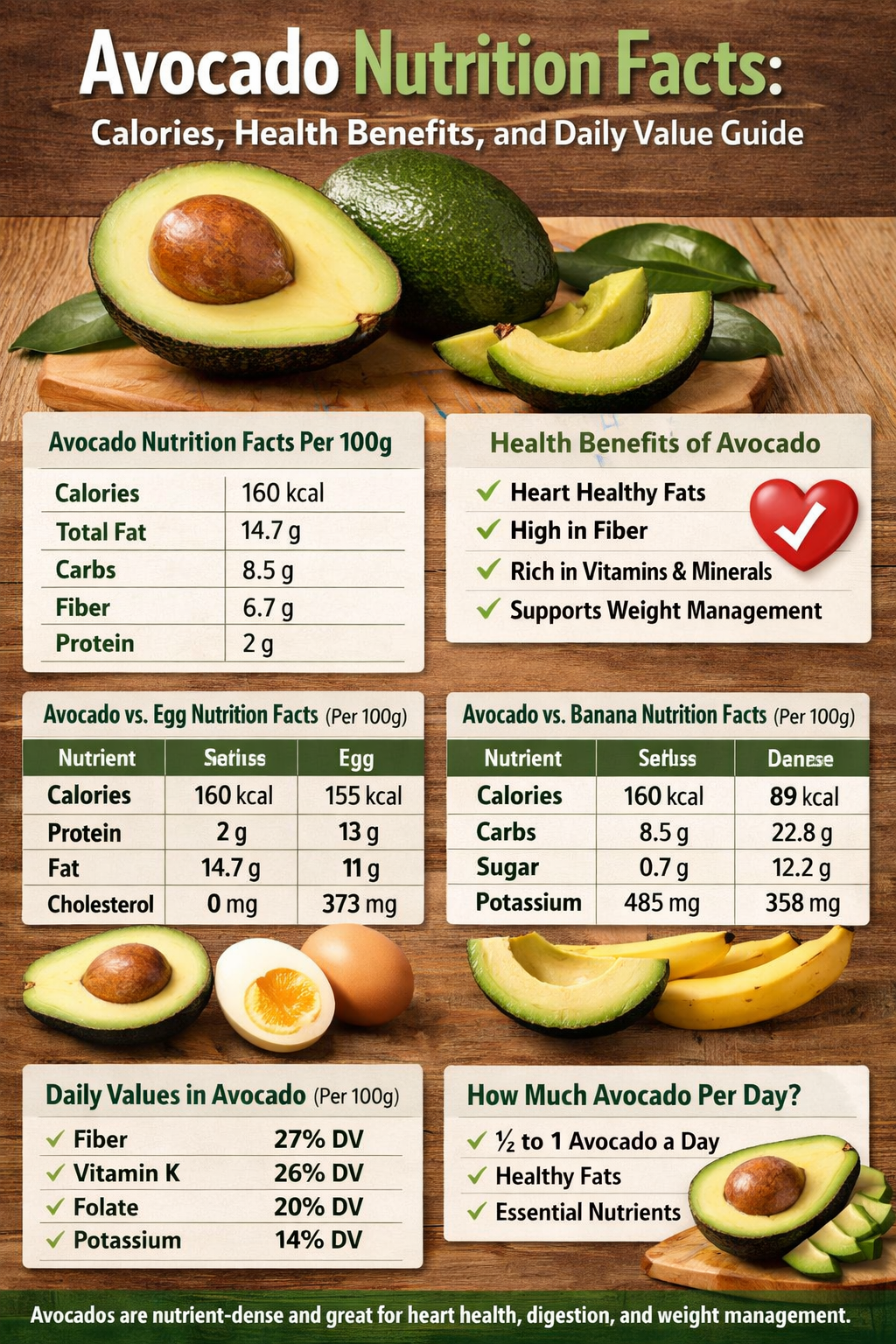
Avocado Nutrition Facts Per 100 Grams
Understanding the standard nutrition facts per 100 grams provides a clear baseline.
Table: Avocado Nutrition Facts Per 100g
| Nutrient | Amount |
|---|---|
| Calories | 160 kcal |
| Total Fat | 14.7 g |
| Saturated Fat | 2.1 g |
| Carbohydrates | 8.5 g |
| Dietary Fiber | 6.7 g |
| Sugars | 0.7 g |
| Protein | 2.0 g |
| Potassium | 485 mg |
| Vitamin C | 10 mg |
| Vitamin E | 2.1 mg |
| Vitamin K | 21 mcg |
These avocado nutrition facts explain why avocados are filling, nutrient-rich, and supportive of overall health.
Calories in Avocado and Portion Control
Calories play an important role in nutrition facts, especially for weight management.
Calories by Common Avocado Portions
- One medium avocado contains about 234 calories
- Half an avocado contains roughly 117 calories
- One tablespoon of mashed avocado has about 25 calories
Although avocados are calorie-dense compared to bananas, their fiber and fat content contribute to satiety, making portion control easier when consumed mindfully.
Macronutrient Breakdown of Avocado Nutrition Facts
Macronutrients include fats, carbohydrates, and protein. Avocados have a very different macronutrient profile compared to egg nutrition facts and banana nutrition facts.
Healthy Fats in Avocado
Avocados are rich in monounsaturated fats, similar to olive oil.
Benefits of these fats include:
- Improved heart health
- Better cholesterol balance
- Enhanced absorption of fat-soluble vitamins
- Reduced inflammation
Carbohydrates and Fiber
While avocados contain carbohydrates, most of them come from fiber rather than sugar.
- Total carbs are moderate
- Sugar content is very low
- Fiber content is high
This makes avocados suitable for low-sugar and low-glycemic diets.
Protein Content
Avocados are not a high-protein food, but they still contribute small amounts of plant-based protein.
Vitamins and Minerals in Avocado Nutrition Facts
Micronutrients are a major strength of avocados.
Key Vitamins Found in Avocado
- Vitamin K for bone health
- Vitamin E for antioxidant protection
- Vitamin C for immunity
- B vitamins for energy metabolism
- Essential Minerals in Avocado
- Potassium supports heart and muscle function
- Magnesium aids nerve and muscle health
- Copper supports red blood cell formation
- Iron contributes to oxygen transport
Avocado nutrition facts show higher potassium content than bananas, which surprises many people comparing banana nutrition facts with avocado nutrition facts.
Is Avocado Healthy
Avocados are healthy because they provide heart-friendly fats, high fiber, essential vitamins, and minerals while remaining low in sugar. Their nutrition facts support heart health, digestion, and weight management when eaten in moderation.
Health Benefits Backed by Avocado Nutrition Facts
Heart Health Support
Monounsaturated fats help reduce LDL cholesterol and increase HDL cholesterol.
Benefits include:
- Lower risk of heart disease
- Improved blood lipid profiles
- Reduced inflammation markers
Digestive Health
- Fiber in avocados supports digestion by:
- Promoting healthy gut bacteria
- Preventing constipation
- Improving nutrient absorption
Weight Management
Despite being calorie-dense, avocado nutrition facts support weight control by:
- Increasing fullness
- Reducing cravings
- Supporting stable blood sugar levels
Daily Value Percentages in Avocado Nutrition Facts
Daily values help measure how much a nutrient contributes to your daily diet.
Table: Avocado Daily Value Percentages Per 100g
| Nutrient | % Daily Value |
|---|---|
| Dietary Fiber | 27% |
| Vitamin K | 26% |
| Folate | 20% |
| Vitamin C | 17% |
| Potassium | 14% |
| Vitamin E | 10% |
These nutrition facts demonstrate why avocados are often recommended in balanced diets.
Avocado Nutrition Facts vs Egg Nutrition Facts
Eggs and avocados are often compared because both are nutrient-dense.
Table: Avocado vs Egg Nutrition Facts Per 100g
| Nutrient | Avocado | Egg |
|---|---|---|
| Calories | 160 kcal | 155 kcal |
| Protein | 2 g | 13 g |
| Total Fat | 14.7 g | 11 g |
| Carbohydrates | 8.5 g | 1.1 g |
| Fiber | 6.7 g | 0 g |
| Cholesterol | 0 mg | 373 mg |
Egg nutrition facts highlight protein and cholesterol, while avocado nutrition facts emphasize fiber and healthy fats.
Avocado Nutrition Facts vs Banana Nutrition Facts
Bananas are known for carbohydrates and quick energy.
Table: Avocado vs Banana Nutrition Facts Per 100g
| Nutrient | Avocado | Banana |
|---|---|---|
| Calories | 160 kcal | 89 kcal |
| Carbohydrates | 8.5 g | 22.8 g |
| Sugar | 0.7 g | 12.2 g |
| Fiber | 6.7 g | 2.6 g |
| Potassium | 485 mg | 358 mg |
Banana nutrition facts focus on carbs and sugars, while avocado nutrition facts focus on fats and fiber.
How Avocados Fit into a Balanced Diet
Avocados can be incorporated into many meal styles.
Practical Ways to Eat Avocado
- Added to salads for healthy fats
- Spread on whole-grain toast
- Blended into smoothies
- Used as a topping for eggs
- Mixed into grain bowls
Pairing avocados with protein-rich foods improves nutrient absorption and meal balance.
Common Myths About Avocado Nutrition Facts
Myth: Avocados Are Too Fattening
While calorie-dense, avocados promote fullness and may help prevent overeating.
Myth: All Fats Are Bad
Avocado fats are beneficial and support heart health.
Myth: Bananas Are Always Healthier
Nutrition facts show that health depends on dietary needs, not one specific fruit.
How Much Avocado Should You Eat Per Day
Most people can safely eat half to one avocado per day. This portion provides healthy fats, fiber, and essential nutrients without excessive calorie intake.
Reading Nutrition Facts Labels Correctly
Understanding nutrition facts labels helps compare foods accurately.
Tips for Reading Nutrition Facts
- Check serving size first
- Look at calories per serving
- Evaluate fat quality
- Review fiber and sugar content
- Compare daily value percentages
These skills help evaluate foods beyond avocados, eggs, and bananas.
Nutrition Facts for Special Diets
Avocado Nutrition Facts for Weight Loss
- Supports satiety
- Reduces cravings
- Stabilizes blood sugar
Avocado Nutrition Facts for Diabetes
- Low sugar content
- High fiber
- Supports glycemic control
Avocado Nutrition Facts for Athletes
- Provides potassium
- Supports muscle function
- Supplies sustained energy
Sustainability and Avocado Consumption
While avocados are nutritious, responsible consumption is important due to environmental factors. Choosing locally sourced or sustainably farmed avocados helps reduce impact.
Conclusion
Avocado nutrition facts reveal a food that is rich in healthy fats, fiber, vitamins, and minerals. Compared to egg nutrition facts and banana nutrition facts, avocados stand out for heart health and satiety. Understanding nutrition facts empowers better dietary choices and supports long-term health.
When eaten in moderation and paired with other whole foods, avocados can play a powerful role in a balanced and nutritious diet.
Read More:- Eggs Nutrition Facts Guide: Raw Eggs, Scrambled Eggs, and 2 Eggs Compared